


BlogPlatform
Five Things Brikl Replaces for Distributors
Order emails, artwork ping-pong, blank sourcing, invoicing, and sales tax — here's what goes away when you move to Brikl.

Every distributor knows the drill. A customer places an order, and what follows is a chain of manual steps: forwarding the PO, prepping artwork, negotiating blanks, invoicing, filing sales tax. Each step works fine in isolation. Together, they're the reason your margins shrink and your days get longer with every new account.
Here are five things that disappear when you run your stores on Brikl — and what replaces them.
1. Order Emails and PO Forwards → Automatic Order Routing
The old way: A customer order comes in via email, web form, or phone. You open a spreadsheet or ERP, create a purchase order, and forward it to the right decorator. If the order has mixed decoration methods — say embroidery on polos and DTG on tees — you split it manually and send separate POs to separate vendors. Every forwarded email is a chance for a wrong quantity, a missed size, or a lost attachment.
On Brikl: Orders route automatically. When a customer completes checkout, the platform validates the order, splits it by decoration method and fulfillment partner, and sends structured production jobs directly to the right decorator. No email. No PO. No re-keying. The distributor doesn't touch the order at all — unless they want to.
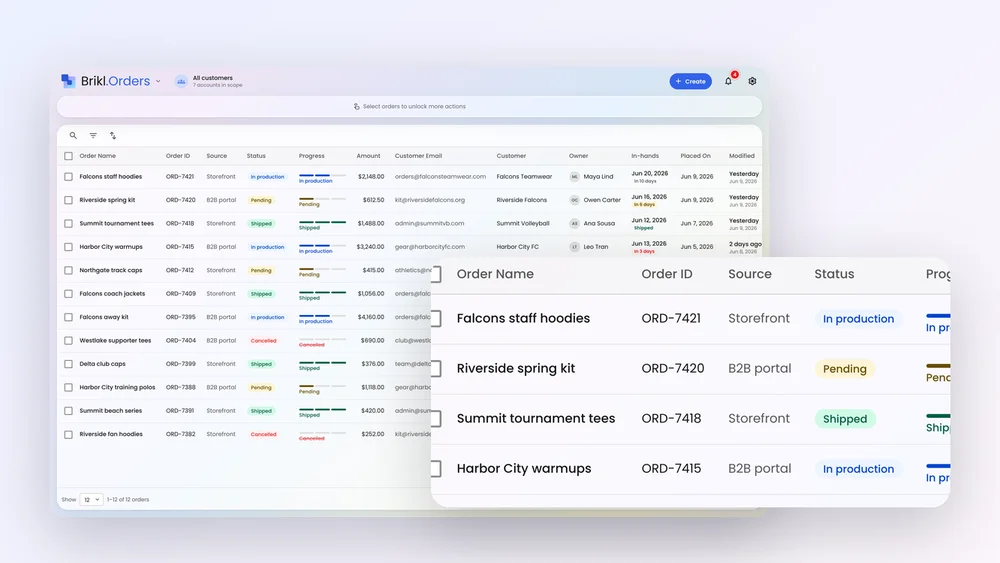
Why it matters: Order routing is the single biggest time sink for distributors managing multiple stores. Automating it doesn't just save time — it eliminates the most common source of production errors.
2. Artwork Approval Ping-Pong → Production-Ready Files at Checkout
The old way: The client sends a logo — usually a low-resolution JPEG from their website. Your art department converts it to a vector, separates colors for screen printing or digitizes it for embroidery, creates a virtual proof, and emails it back. The client doesn't respond for two days. You follow up. They request a change. Another round. By the time artwork is approved, a week has passed and production hasn't started.
On Brikl: Artwork is configured once, at the catalog level. When you add a product to a store, you assign logos to specific decoration locations — front chest, back, sleeve, cap front — and choose the decoration method. The platform generates production-ready files automatically. When a customer orders, the artwork is already done. No proofing round. No email chain. No waiting.
Why it matters: Artwork approval is the longest delay in the traditional promo workflow. Removing it compresses lead times from weeks to days and eliminates the back-and-forth that frustrates both distributors and clients.
3. Blank Sourcing Negotiations → 7,500+ Decorated SKUs with Real-Time COGS
The old way: You find a blank product in a supplier catalog. You negotiate a price. You figure out decoration costs separately — which depend on the method, the number of colors, the number of locations, and the quantity. You calculate a total COGS manually. If the client wants a different brand or product, you start over.
On Brikl: The marketplace has 8,000+ products from 190+ wholesale brands — already priced with decoration included. Every product shows a real-time COGS that factors in the blank, the decoration method, and the fulfillment partner. You see your true cost before you set your markup. No negotiations. No separate decoration quotes. No surprises.
Why it matters: Distributors on Brikl set their markup once and know their exact margin on every sale. There's no guesswork, no quote chasing, and no risk of underpricing a job because you forgot to factor in a second decoration location.
4. Invoicing Customers and Chasing Payments → Merchant of Record
The old way: You invoice the client. The client pays in 30 days — or 45, or 60. You follow up. You send reminders. Meanwhile, you've already paid the decorator. Your cash flow is negative for weeks on every order. And if a customer disputes a charge, you handle the chargeback yourself.

On Brikl: Brikl is the Merchant of Record. That means we process the payment at checkout — the customer pays immediately via credit card. We handle chargebacks, refunds, and disputes. Your profit is calculated automatically (sell price minus COGS minus platform commission minus shipping) and deposited to your Stripe account on a regular schedule.
Why it matters: Net-30 invoicing is the silent killer of distributor cash flow. When payment is collected at the point of sale, your cash cycle drops from weeks to days. You never chase a payment again.
5. Sales Tax Headaches in 50 States → Auto-Filed for You
The old way: If you sell to customers across multiple states — and most on-demand stores do — you're responsible for calculating, collecting, and remitting sales tax in every jurisdiction where you have nexus. The rules are different in every state. Some tax decorated apparel. Some don't. Some have local surtaxes. You either hire an accountant, subscribe to a tax compliance service, or quietly hope nobody audits you.
On Brikl: Because Brikl is the Merchant of Record, sales tax is our problem. We calculate the correct rate at checkout based on the shipping destination, collect it from the customer, and file it with the relevant tax authority. You don't touch it. You don't think about it. It doesn't appear on your payout — because it was never your money to begin with.
Why it matters: Sales tax compliance is the most dreaded administrative burden for distributors selling online. Removing it entirely — not simplifying it, but eliminating it — is one of the most underrated benefits of the Merchant of Record model.
The Compound Effect
Any one of these changes is a nice improvement. Together, they transform the economics of running a store program.
A distributor on the traditional workflow spends hours per week per store on order routing, artwork, invoicing, and tax. A distributor on Brikl spends that time on what actually grows the business: building new stores, landing new clients, and expanding product selection.
The work that remains is the work that creates value. Everything else is automated.
Want to see what changes for your business? Start free on Brikl — no credit card, no monthly subscription. Just 3.5% when you sell.
More from the blog
Platform
Business Cards, On Demand: Adding Personalized Print to Your Merch Stores
Business card programs have always been a separate, manual exercise. Now you can add personalized, on-demand business cards to the same store your clients already use for apparel and hard goods.
Industry
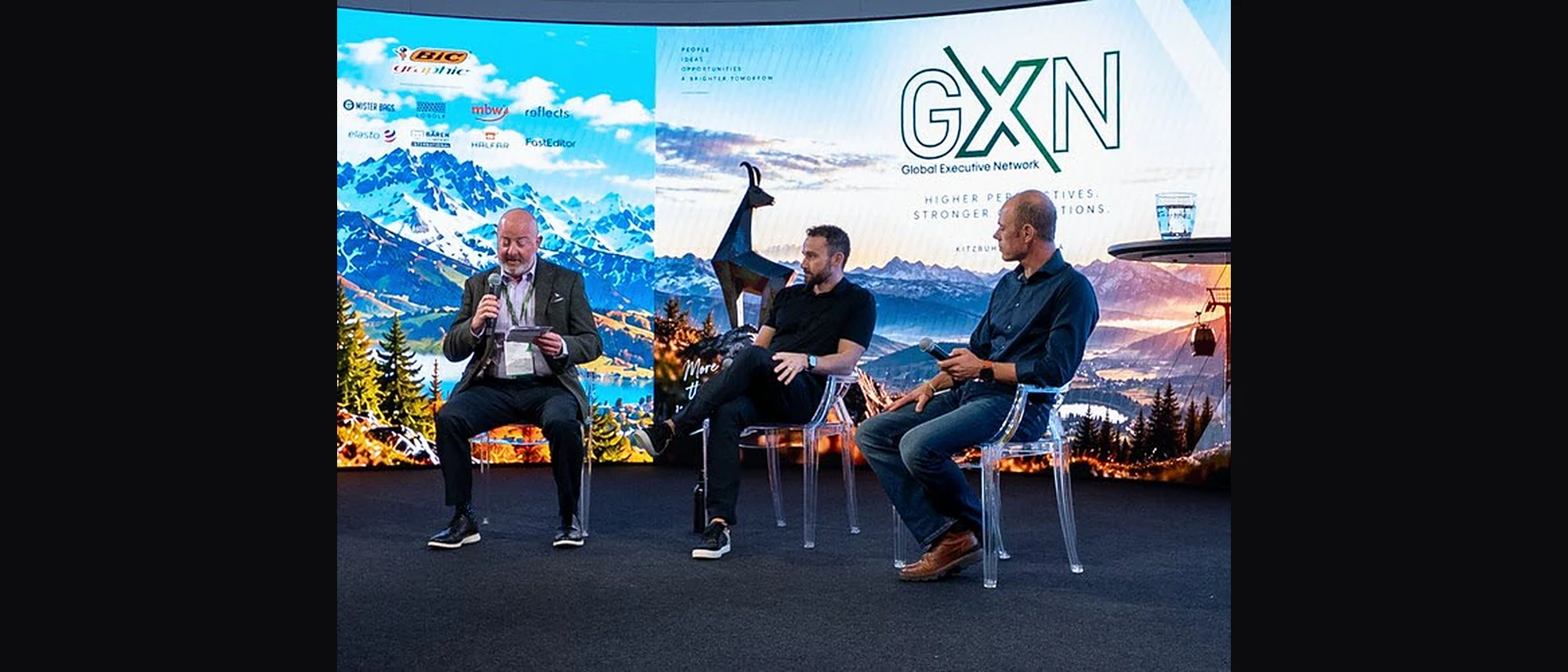
We Standardized the Catalog. Now We Need to Standardize the Order.
Supplier feeds carry the style, the color and the price. The decoration half of the order still arrives by email, one order at a time. At GXN in Kitzbühel, we talked about who fills that gap, and what it would take to close it.
Guide
Self-Service Swag Ordering for Employees
The office manager shouldn't be the swag department. Self-service ordering lets employees get what they need without a request, a form or a bulk buy.