



What is branded merchandise?
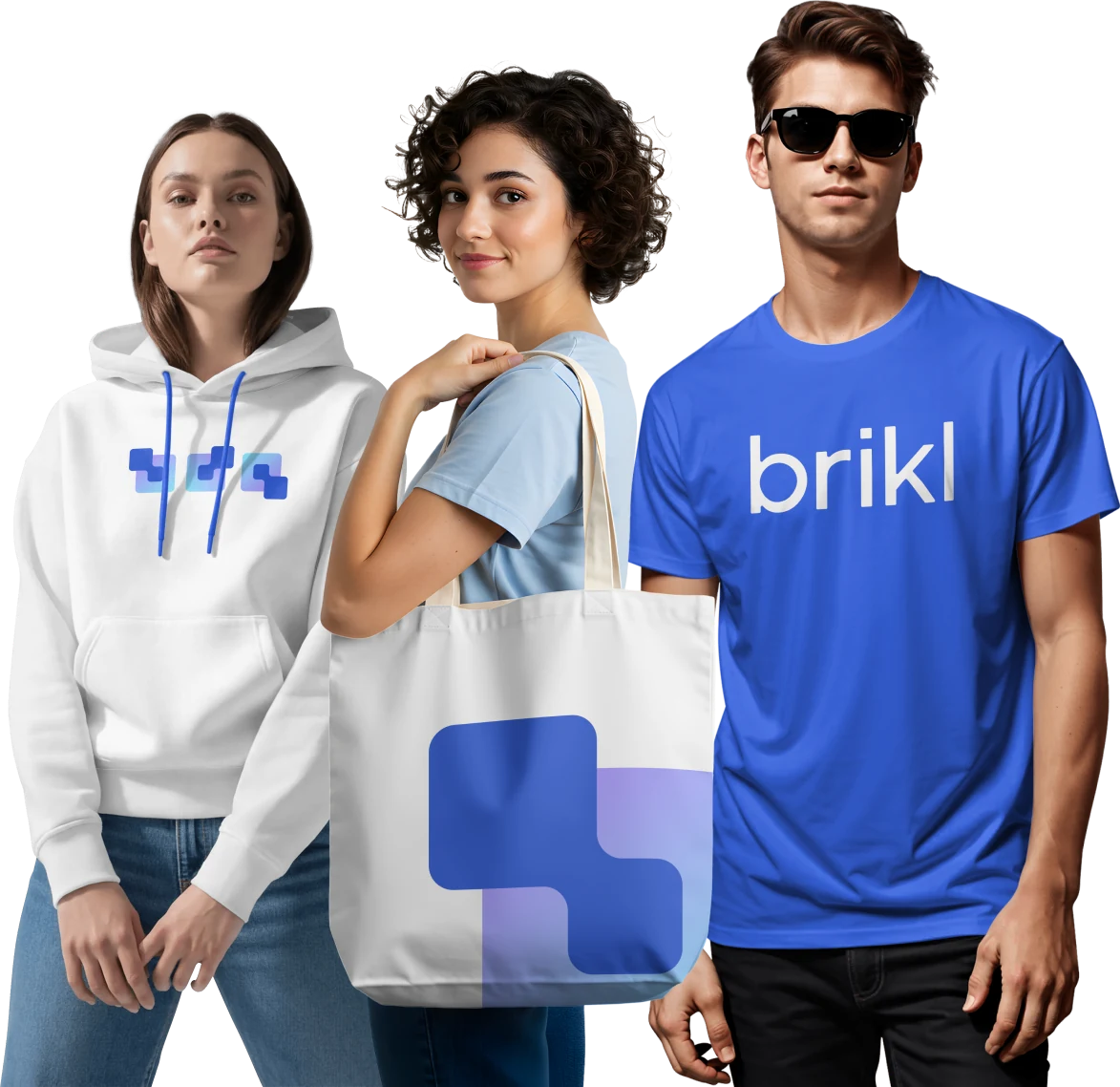
Branded merchandise — branded merch — is a physical product carrying a brand’s logo or message, given or sold to move attention, memory and connection. It works: a PPAI survey of 1,000 U.S. consumers found 54% still have the last branded item they received. Brikl is the on-demand platform brands and distributors use to design, produce and sell it.
54%
still have the last branded item they received
77%
looked up a brand after getting its merch
89%
say design decides whether they keep it
0
inventory or minimums on Brikl
Branded merch vs. promotional products
They describe the same thing — logo’d physical product used for marketing, culture and gifting — but in different words. “Promotional products” is the trade’s term; “branded merch” (and “company swag,” “custom merch”) is what the people buying it search for. The difference is more than vocabulary: branded merch carries the expectation of something closer to retail — product people choose, personalize and keep, rather than a giveaway destined for a drawer.
| Promotional products | Branded merch | |
|---|---|---|
| Who uses the term | The trade — distributors, suppliers, decorators | The buyer — marketers, HR, founders, organizers |
| Connotation | Marketing giveaway, a cost line | A brand asset people want to wear and keep |
| Typical model | Bulk orders with minimums and inventory | On-demand — produced when ordered, no minimums |
| What it covers | Apparel, drinkware, bags, writing, tech, hard goods | The same products — described in buyer language |
Does branded merchandise work?
Branded merchandise works. In a PPAI survey of 1,000 U.S. consumers, 77% looked up a brand after receiving its merch, and 72% reported purchasing because of a branded good — a self-reported influence, not measured attribution. A UK study of 1,000 workers found 75% researched or engaged with a brand after receiving a promotional product.
What makes people keep branded merch?
Usefulness and design. PPAI’s researchfound 68% keep items they will actually use, 89% say design influences whether they keep a product, and 48% say personalization makes an item more memorable. Merch that’s worth keeping is chosen, not scattered.
Why do people throw branded merch away?
Quality. 62% cite poor material or build quality as the reason items feel forgettable. A cheap item is thrown away; a good one is worn, used and seen for years.
Does branded merch improve brand recall?
Yes. 61% remember the brand from their most recent piece of merch and 38% still remember it months or years later. In the UK study, 64% said a physical branded product left a stronger impression than a digital advert.
Is branded merch worse for the environment than digital advertising?
No. A PPAI/ASI carbon studyfound branded merchandise’s carbon impact per memorized impression is about eight times smaller than digital advertising, and roughly 20 times lower than TV per campaign. The finding is directional and comparative — not a product-level life-cycle assessment.
What branded merch moves
The category moves six things a brand cares about — the argument behind PPAI’s Merch Moves Us initiative.
Attention
A useful object earns a look that a skippable ad doesn't.
Memory
A physical item is a recurring reminder, not a one-time impression.
Participation
Merch turns an audience into wearers, users and sharers.
Connection
Receiving merch makes people feel valued and part of something.
Perception
Quality merch signals a brand that cares about quality.
Business value
Merch is a channel with a role in a campaign, not just a giveaway.
How branded merch gets made today
Brikl is the on-demand platform for branded merch. Instead of buying inventory up front, a brand, distributor or organization launches a store, and each item is produced per order and shipped to the buyer — no minimums, no leftover stock, and quality decoration on 8,000+ products.
Traditional promo means guessing quantities months ahead, meeting minimum order quantities, and storing whatever doesn’t get handed out. On-demand flips that: each item is produced only after it’s ordered. Shoppers choose their size, personalize with a name or number, and preview the result — so they receive exactly what they wanted, and nothing extra gets made.
That’s what turns “swag” into merch people actually keep — and it’s also the lowest-waste way to produce it, since nothing is overproduced. More on that on our sustainable branded merch page. For definitions of the terms used here, see the glossary.
See how it works →Explore branded merch on Brikl
However you describe it, Brikl is the platform for launching branded merch stores. Start with the use case closest to yours.
Branded Merch Stores
Custom on-demand merch stores for any organization — companies, schools, teams and clubs.
Explore →Corporate Merchandise
On-demand employee and client stores for company swag, onboarding kits and gifting.
Explore →Teamwear & Spiritwear
Branded gear for teams, schools and clubs — personalized, on-demand, no minimums.
Explore →The Marketplace
Browse the on-demand promo marketplace — thousands of products from wholesale brands.
Explore →Sustainable Branded Merch
Why on-demand — producing only what's ordered — is the lowest-waste way to do merch.
Explore →The Promotional Products Platform
The category explained — what a platform for promotional products distributors has to cover, end to end.
Explore →For Distributors
How distributors and decorators run branded merch programs at scale on Brikl.
Explore →Research & sources
- PPAI consumer study — Does Branded Merchandise Work? 5 Research Findings
- PPAI / ASI carbon study — Branded Merchandise Carbon Impact
- BPMA UK study — From Emotion To Action
Figures are attributed to third-party research from PPAI’s Merch Moves Us initiative. Brikl cites this research and is not endorsed by PPAI.
Frequently asked questions
What's the difference between branded merch and promotional products?
Does branded merchandise work?
What makes people keep branded merch?
Why do people throw branded merch away?
Does branded merch improve brand recall?
Is branded merch worse for the environment than digital advertising?
Make branded merch that gets kept
Launch an on-demand store on Brikl — start free.