



Store Type
Franchise Stores
A franchise store keeps merchandise brand-compliant across every location. On Brikl, each site orders from an approved catalog while headquarters keeps full control over branding, products and pricing.
What is a Franchise Store?
A franchise store is a branded merchandise portal built for multi-location businesses. Headquarters defines the product catalog, approved logos, decoration placements, and pricing. Individual franchise locations then order from that catalog without the ability to go off-brand.
Each location gets access to its own storefront with location-specific options, while you manage everything from a single account. Products are fulfilled on demand — no warehousing, no minimum orders.
What your store looks like
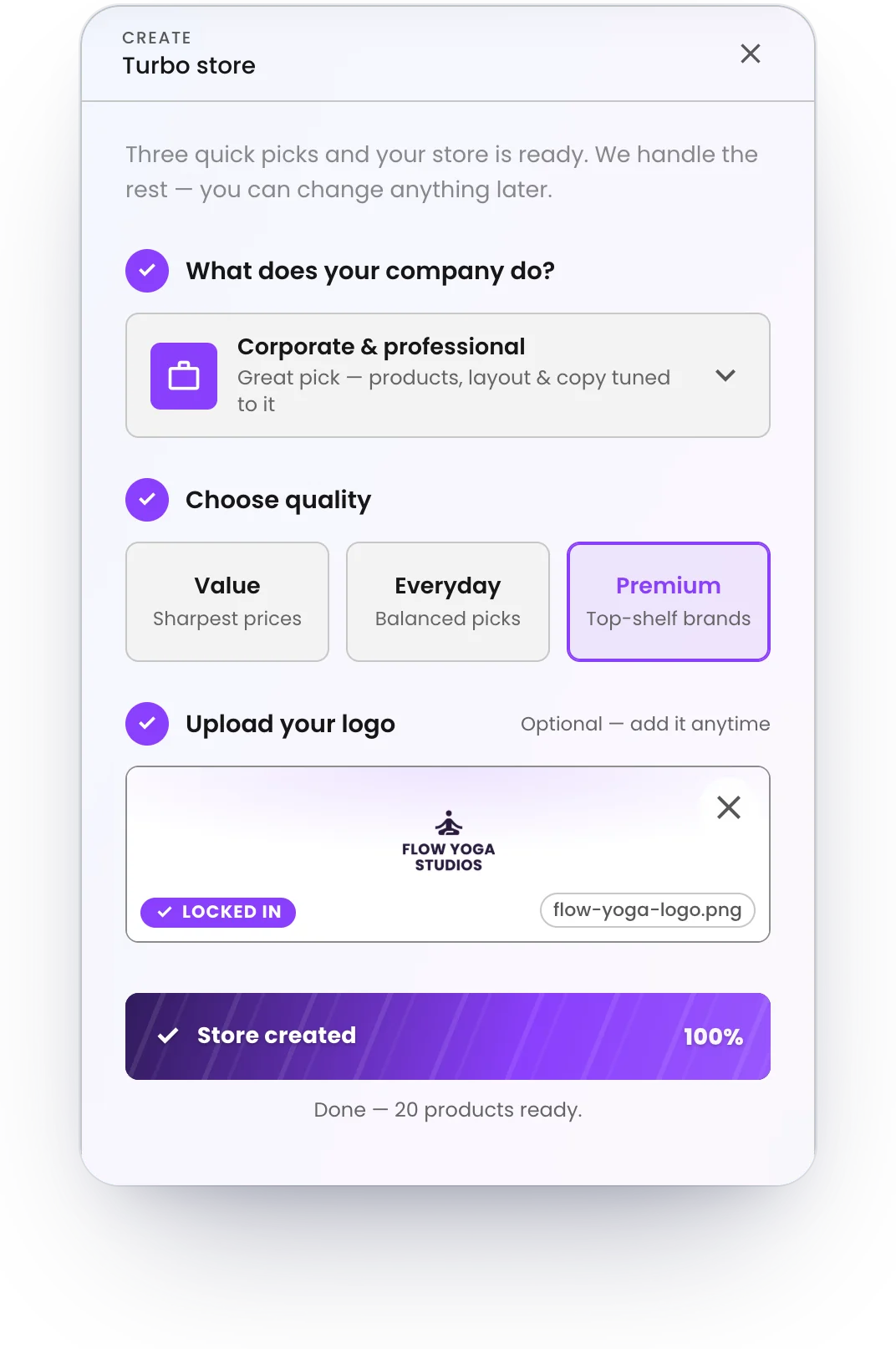
A branded storefront on your own web address, live in ten seconds with Turbo Store. Your logo, your colors, your products — and every order produced on demand and shipped to the buyer.
See live store examples →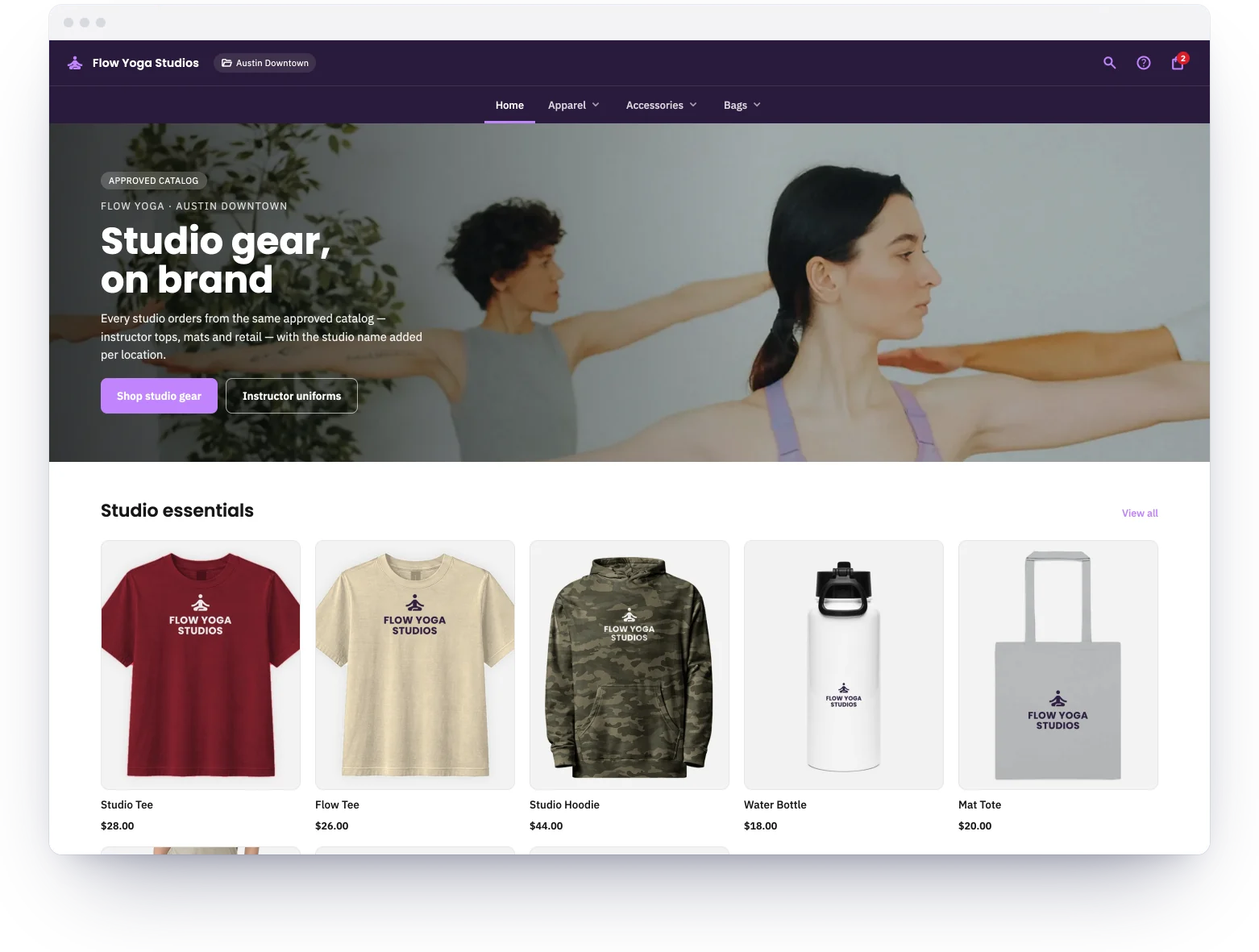
Why Franchise Networks Choose Brikl
Centralized Brand Control
Headquarters locks down approved products, logos, colors, and decoration placements. No location can go off-brand.
Location-Specific Stores
Each franchise location gets its own storefront URL. Staff order from a curated, brand-compliant catalog tailored to their site.
No Inventory Per Location
Every item is produced on demand. Locations don’t need storage rooms full of pre-ordered merchandise.
Single Dashboard
Manage every franchise location from one account. Add new locations, update product catalogs, and track orders centrally.
Consistent Pricing
Set retail prices at the corporate level. Every location pays the same, and you earn margin on every order.
Scalable to Hundreds of Locations
Whether the franchise has 5 locations or 500, the same setup works. Adding a new location takes minutes, not weeks.
What you sell
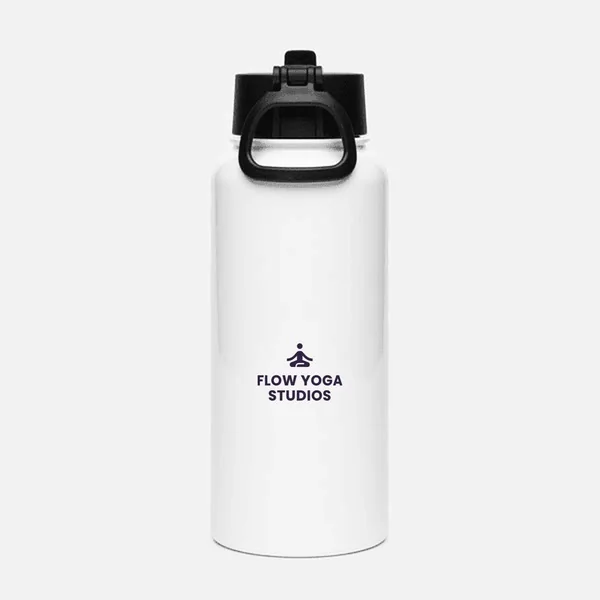
Picks from Brikl’s marketplace of 8,000+ decorated products — all produced on demand.




How locations order
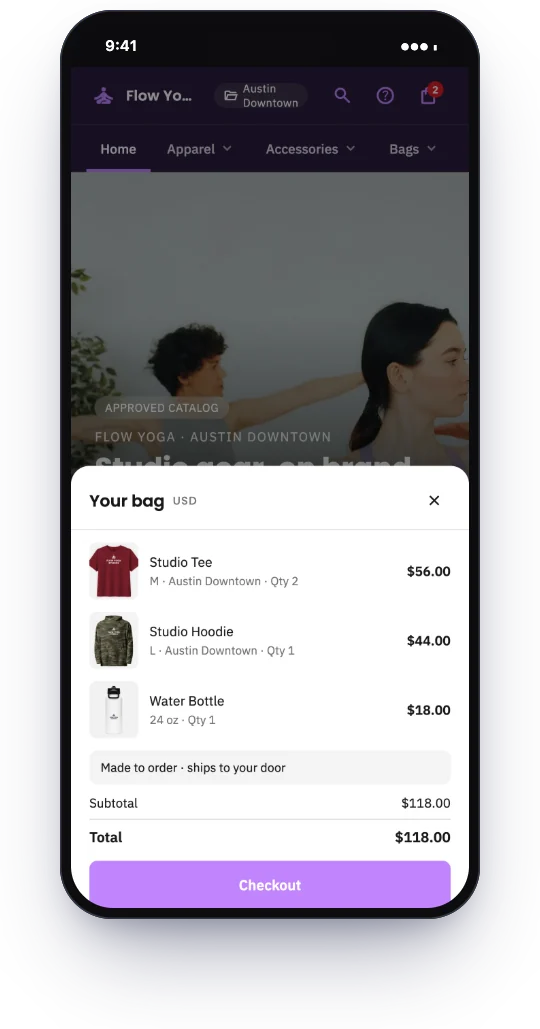
A studio manager signs in, sees only the approved catalog, picks the sizes, and the location's name goes on automatically. Orders are produced on demand and shipped to that studio — headquarters never packs a box, and nobody orders off-brand.
Common Use Cases
- •Fitness and wellness franchises — branded apparel for staff and members at each gym or studio location.
- •Quick-service restaurants — uniform programs and promotional merchandise across all locations.
- •Service-based franchises — cleaning companies, home services, and trade businesses with branded workwear.
- •Retail franchise networks — branded merchandise and employee apparel with per-location ordering.
Setting it up
Set up the brand once
Upload the logo and set the colors at the top. Every location's store inherits them.
Approve the catalog
Choose the products and the decoration each location may order. The catalog is the only thing they see.
Add the locations
Each studio gets its own sign-in, its own address and its own name on the gear.
Share one link per location
Managers order when they need to. You see every order, by location, in one place.
When locations order
A new location opens
Instructor tops, retail and signage for day one, ordered by the new manager from the approved list.
New instructors
A single top with the studio's name, ordered the week they start — no minimum, no spare stock.
Seasonal retail
A limited line for the studio's shelf, released to every location at once and produced per order.
Replacements
A worn-out tee or a lost bottle, reordered by the location in minutes.

Features that power this store type
The Brikl capabilities users lean on most for this kind of store.
Multi Store
Roll out a branded store to every location from one shell — no separate plan.
Learn more →Footprints & sub-organizations
Model the network by region, each location a sub-organization under one parent.
Learn more →Roles & access
Give each location exactly the access it needs, scoped across stores.
Learn more →Launch franchise stores in ten seconds each
Set up the master catalog once. Roll out branded stores to every location — no inventory, no minimums.