



BlogIndustry
The Trifecta: Apparel, Hard Goods and Paper
Apparel, hard goods and paper are the three product categories in almost every promotional program. On-demand production now lets distributors sell all three from one store.

Apparel, hard goods and paper are the three product categories in almost every promotional program. On-demand production now lets distributors sell all three from one store, with no minimums and no inventory, instead of running three separate supply chains.
In short:
- Apparel, hard goods and paper are made by different producers with different decoration methods.
- That split forces minimums, warehousing, split shipments and manual order entry.
- All three categories can now be produced one unit at a time.
- One store can route each item to the right producer automatically.
- Distributors who sell all three keep more of each customer's spend.
Why do apparel, hard goods and paper belong together?
Almost every promotional program a distributor sells touches three categories: apparel, hard goods and paper. A new-hire kit has a quarter-zip, a tumbler and a set of business cards. A conference has staff shirts, tote bags and printed badges. The end customer sees one program.
Most distributors still run it as three separate businesses. Different suppliers, different ordering habits, different minimums and often different people on the team. This post explains why that split exists, what it costs, and how on-demand production lets you sell the trifecta as one offer.
How are apparel, hard goods and paper made differently?
The split is not arbitrary. Each category is produced in a different way, and that shapes how it is bought.
| Category | Typical products | How it is decorated | Who usually decorates |
|---|---|---|---|
| Apparel | T-shirts, polos, hoodies, caps, jackets | Screen print, embroidery, DTG, DTF, heat transfer | Often a separate decorator, not the blank supplier |
| Hard goods | Drinkware, bags, tech accessories, pens, notebooks | Pad print, laser engraving, debossing, full-color UV print | Usually the supplier itself |
| Paper | Business cards, stationery, flyers, stickers, labels, packaging | Offset and digital print, finishing (foil, embossing, die-cut) | A commercial or online printer |
Apparel is the most complex handover. The blank comes from one company and the decoration happens at another, so sizes, colors and artwork have to travel between two parties. Hard goods are simpler: the supplier stocks the blank and decorates it. Paper is a different industry altogether, with its own file standards, paper stocks and print runs.
Each category grew its own supply chain. Distributors simply inherited that structure.
What does running three separate supply chains cost?
Selling three categories through three supply chains creates friction at every step.
- Minimums. Hard goods suppliers typically quote a minimum order quantity. A company store that needs one tumbler for one employee does not fit that model.
- Inventory. To meet minimums, distributors buy in bulk and store the rest. Now they own warehousing, counting, shipping and the leftovers nobody wants.
- Split shipments. One order becomes three purchase orders, three proofs, three tracking numbers. The customer waits for the slowest one.
- Manual work. Every handover between systems is an email or a spreadsheet. Someone on the team re-keys sizes, imprint colors and addresses.
- Narrow offers. Many distributors lean on the one category they handle well and leave the rest to someone else. The customer then buys paper from an online printer and drinkware from a marketplace.
The last point matters most. Each category you cannot serve easily is spend that leaves your account.
How does on-demand production change the picture?
On-demand production means an item is decorated only after someone orders it, in a quantity of one if needed. No minimum, no stock, no leftovers.
For a long time, on demand was mainly an apparel story: DTG and DTF printing made single shirts economical. That has changed. Hard goods are now printed on demand too, with UV and sublimation on drinkware, bags and accessories. Paper was always closest to on demand: digital print made short runs of business cards and stationery normal years ago.
So all three categories can now be produced one order at a time. Once that is true, the main reason to run them separately disappears. The minimum, the warehouse and the bulk buy were what forced three different workflows. Without them, one workflow can carry all three.
| Three separate supply chains | One on-demand trifecta store | |
|---|---|---|
| Minimum order | Set by each supplier | One unit |
| Inventory | Bought in bulk, stored by the distributor | None; made after the order |
| Ordering | Three purchase orders, three proofs | One checkout, routed automatically |
| Order entry | Re-keyed by email and spreadsheet | Production-ready job sent to each producer |
| Shipping and tracking | Separate, followed up manually | Each producer ships direct; status shown in one order |
| What the customer sees | Three vendors | One store |
What does a single trifecta store look like?
For the end customer, the trifecta should look like one store. An employee picks a hoodie, a water bottle and a box of business cards with their own name on them, and checks out once.
Behind that single checkout, the work is split again, but by software instead of by people:
- The order is split by category. Each line item knows which producer makes it.
- Each producer gets a complete job. Apparel goes to an apparel decorator, the bottle to a hard goods producer, the cards to a printer. Each job carries the right artwork, imprint location, colors and personal details.
- Production starts immediately. No proof emails, no re-keying, no waiting for a minimum to fill.
- Status flows back. Tracking and shipping updates return to the store, so the distributor and the customer see one order, not three.
This is where the real difficulty sits. Selling three categories is easy. Describing each item precisely enough that a different producer can make it without a single email is hard. Apparel needs sizes and decoration methods, hard goods need imprint areas and techniques, paper needs bleed, stock and finishing.
At Brikl we connect all three on one platform. Apparel and hard goods run through on-demand partners such as Printful and Printify, and paper products such as business cards through Taylor OnDemand; the full list is on our partners page. The distributor sets up the store and the prices; the platform routes every order to the right producer. Read more about on-demand fulfillment for distributors.
How can distributors start selling the trifecta?
You do not need to rebuild your business to sell the trifecta. Start with one customer program you already run.
- List every item in that program and sort it into apparel, hard goods and paper.
- Mark which items you buy in bulk only because of a minimum.
- Note which categories the customer buys somewhere else today.
- Pick one item from your weakest category and offer it on demand in that program.
The goal is simple: everything your customer needs with their logo on it, in one place, ordered one at a time. Apparel, hard goods and paper are three supply chains. For your customer, they should be one.
Ready to sell the trifecta? Create a free Brikl account and launch your first on-demand store, or see our pricing. Visiting The PPAI Expo 2027 in Las Vegas? Come see us at booth 5055.
Frequently asked questions
What does "the trifecta" mean in promotional products?
It refers to the three main product categories in branded merchandise: apparel, hard goods and paper. Most customer programs need items from all three.
What counts as hard goods?
Hard goods are non-textile, non-paper items: drinkware, bags, tech accessories, pens, tools and similar products. They are usually decorated by pad print, laser engraving, debossing or full-color UV print.
Can paper products really be printed on demand?
Yes. Digital printing made short runs of business cards, stationery, notebooks and stickers practical years ago. Paper is often the easiest category to produce one order at a time.
Is on demand more expensive per unit than bulk ordering?
The unit price is usually higher than a large bulk run. But you pay nothing for storage, leftovers, or the staff time spent counting and shipping stock. For company stores with unpredictable demand, the total cost is often lower.
Do I need separate suppliers for each category?
The producers are still different, because each category is made differently. What changes is that a platform can connect them, so you manage one store and one order flow instead of three supplier relationships by email.
Does the customer receive everything in one package?
Not always. Each producer ships its own items directly, so a mixed order can arrive in more than one package. The customer still sees one order, with tracking for every part in one place.
More from the blog
Industry
We Standardized the Catalog. Now We Need to Standardize the Order.
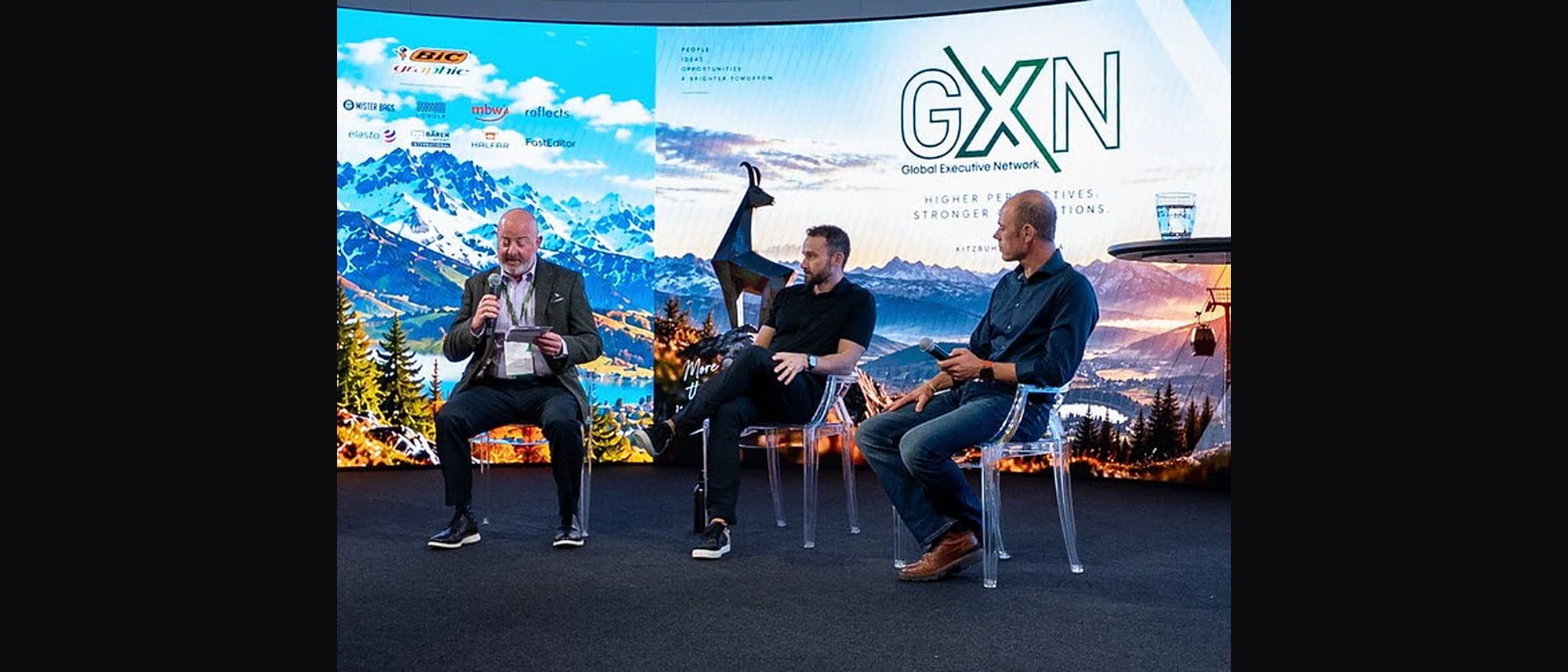
Supplier feeds carry the style, the color and the price. The decoration half of the order still arrives by email, one order at a time. At GXN in Kitzbühel, we talked about who fills that gap, and what it would take to close it.
Industry
A Thousand Suppliers, and About a Dozen Can Tell You Where the Order Is
We tried to solve order status for our largest distributor customers and failed. Working out why took us somewhere more useful than another integration: the industry has been standardizing the wrong layer.
Industry
Your Platform Should Meet You Inside the AI You Already Use
The third piece in this series. Intent only becomes a real interface if a platform's actual operations are reachable — and the open standard that makes that possible has already arrived.