



BlogGuide
How Much Can a Merch Fundraiser Raise? Examples by Group Size
Published: Last updated:
Estimate what your merch fundraiser could raise with one simple formula, plus examples for a PTA, a sports club and a nonprofit.
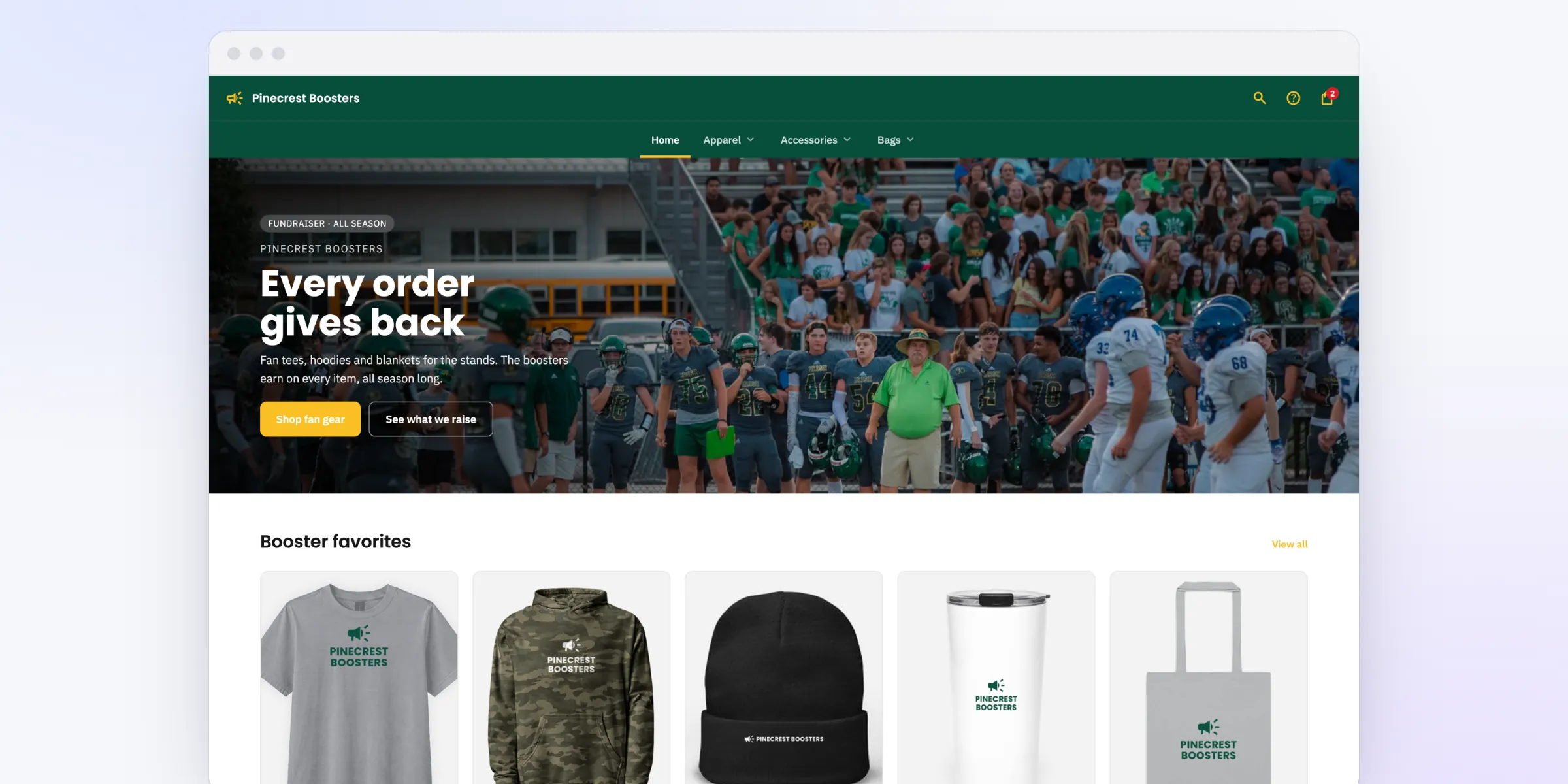
A Brikl merch fundraiser's estimated total is the number of items sold multiplied by the amount set aside for the cause per item.
A merch fundraiser raises the number of items sold multiplied by the amount each item contributes. To estimate it, work out how many people will buy, how many items they will buy and what each item gives to the cause. The result depends on your group, so use the estimate to plan rather than as a promise.
The formula
People you can reach × share who buy × items per buyer × set-aside per item = estimated amount raised
For a percentage set-aside, use the percentage of the average item price as the amount per item.
Three illustrative examples
These examples use assumptions, not Brikl customer results. Replace them with your own numbers.
| Group | People reached | Share who buy | Items per buyer | Set-aside | Items sold | Estimated raised |
|---|---|---|---|---|---|---|
| School PTA | 300 families | 40% | 1.5 | $6 | 180 | $1,080 |
| Sports club | 120 players | 60% | 2 | $8 | 144 | $1,152 |
| Nonprofit | 2,000 supporters | 3% | 1.25 | $7 | 75 | $525 |
The nonprofit reaches the most people but raises the least in this example because the assumed buying rate is lower. A closer community can often matter more than a longer email list.
Should you use a percentage or a fixed amount?
Both work. A fixed amount is easy to explain: "$5 from every item goes to the team." A percentage scales with price: 15% raises $3.75 on a $25 tee and $9 on a $60 hoodie.
Use a fixed amount when prices are close together. Use a percentage when your store has a wide price range. Read our guide to flat and percentage fundraisers for more detail.
What changes the result most?
- Reach: a link sent directly to your community usually matters more than a general social post.
- Timing: tie the store to a season, event or campaign.
- Product choice: offer items people will actually use.
- Reminders: many people need more than one message.
- Clear purpose: say exactly what the money will support.
How much should the set-aside be?
Start with the price supporters will accept, then check the product cost, decoration, delivery and platform fee. If the set-aside makes the price too high, sales can fall and the total may drop.
Brikl's illustrative pages show a $6 set-aside on a $22 tee and an $8 set-aside on a $45 hoodie. You set your own prices and amounts.
How do you know what to pay out?
Decide this before launch. On Brikl, a fundraiser is tracked and reported separately from your margin, so you can see what is owed to the group.
What does it cost to run?
On Brikl, there is no setup fee, subscription or stock to buy. Brikl charges 3.5% per transaction on the selling price including shipping and excluding tax. Card processing is separate: 2.9% + $0.30 through Stripe in the US, based on the checkout total including tax.
Use the fundraising calculator to test your own numbers.
Open your store — start free
Brikl is a branded merch platform built for scale. Companies, schools, clubs, nonprofits, creators and distributors run on-demand stores and bulk orders from one marketplace, with no inventory.
Frequently asked questions
Can we set a target?
Yes. A Brikl fundraiser can carry a goal and show what has been collected against it.
Can we run several campaigns at once?
Yes. You can run multiple campaigns in one store, each with its own items and goal.
Can supporters give more?
Yes. Brikl's fundraising supports donations at checkout.
More from the blog
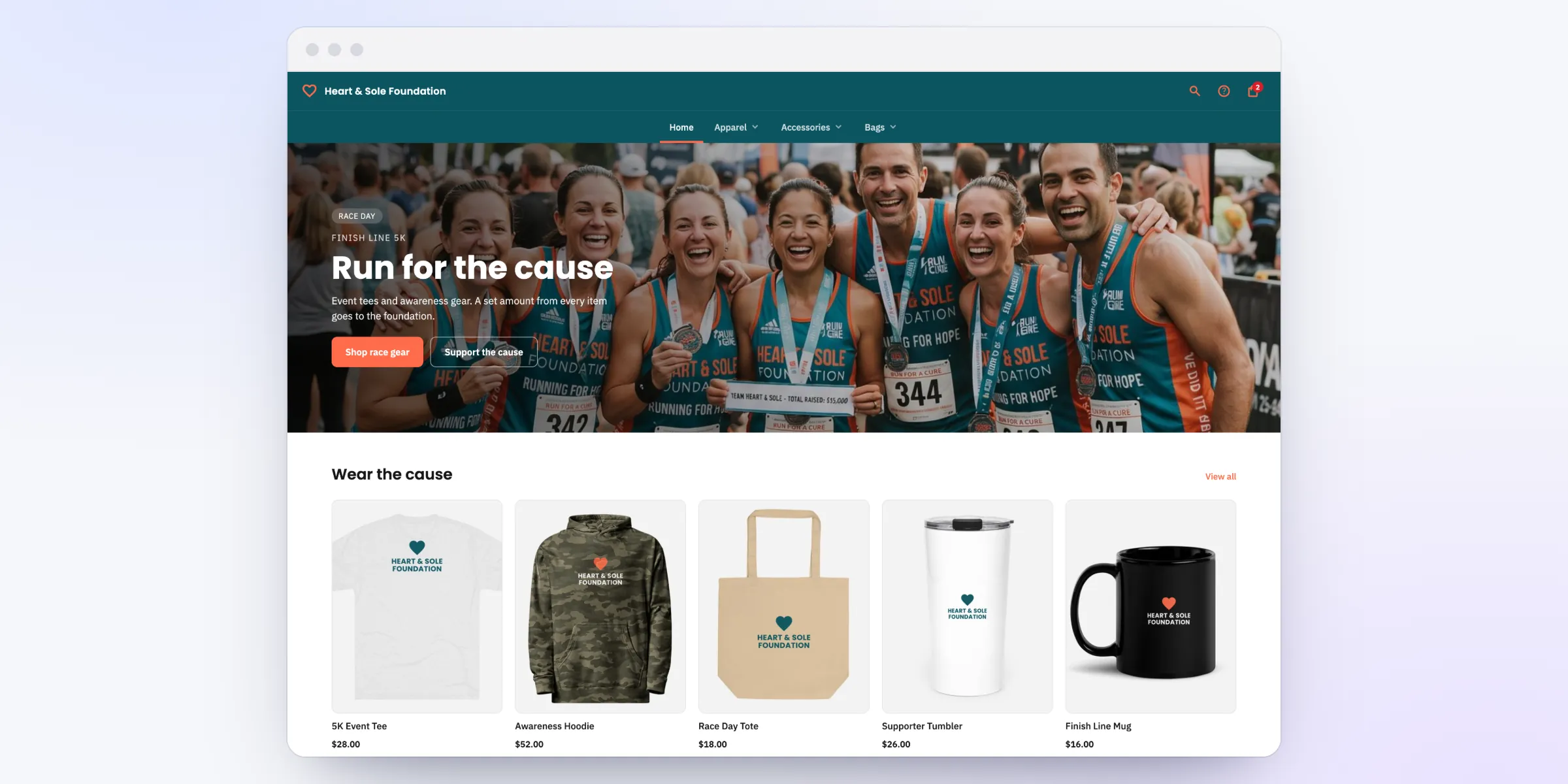
Guide
Can a Nonprofit Sell Merchandise? Sales Tax, Exemptions and What to Check
Yes, nonprofits can sell merchandise, but tax rules vary. See what to check on sales tax, unrelated business income and exemption documents.
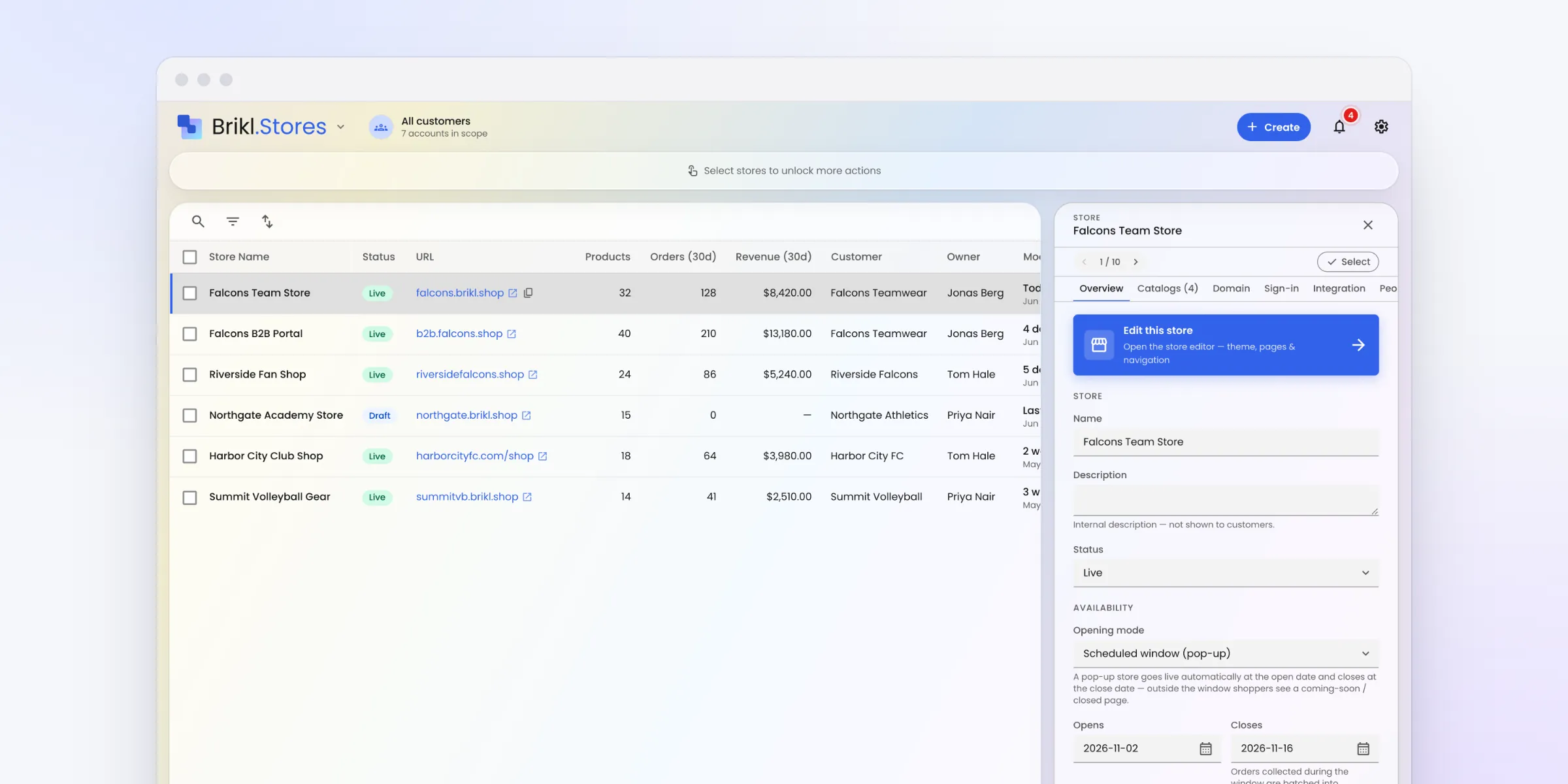
Guide
How to Run a Pop-Up Shop Fundraiser With No Inventory
Run a pop-up shop fundraiser with no upfront cost or leftover stock. Set the dates, choose the products and raise money on every item.

Guide
Fundraising With Merch, Without the Logistics
Merch fundraisers usually mean guessing quantities, fronting cash, and sorting boxes. On-demand fundraising raises money on the gear people already want — with none of that.