

BlogGrowth
8 Features Every On-Demand Company Store Must Have in 2026
A checklist of the capabilities that separate real on-demand store platforms from adapted e-commerce tools — based on what promotional product distributors actually need.
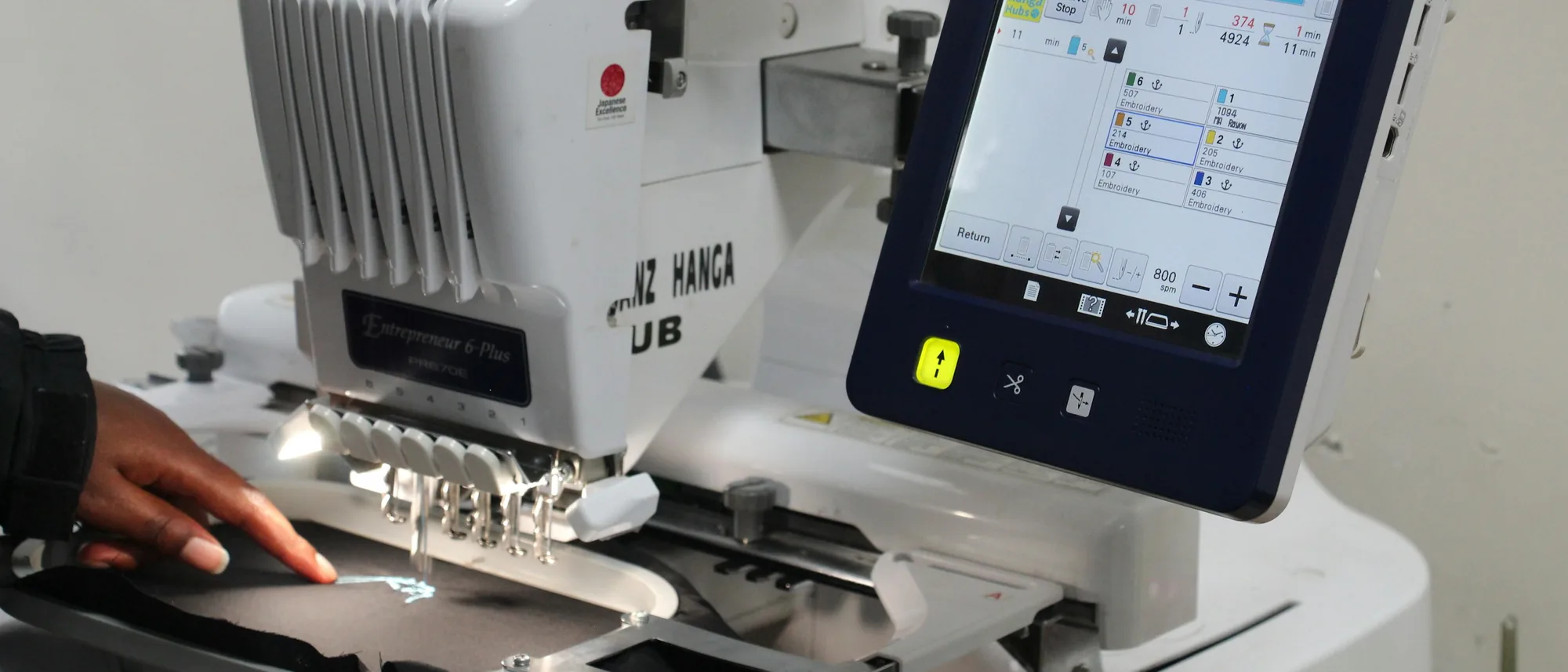
Not all company store platforms are created equal. Many distributors start with generic e-commerce tools — Shopify, WooCommerce, BigCommerce — and quickly discover that these platforms weren't built for promotional products. They lack decoration workflows, don't support multiple logo placements, can't connect to fulfillment partners, and force you to manage inventory manually.
A real on-demand company store platform needs to be purpose-built for the promo industry. Here are the eight features that separate serious platforms from adapted e-commerce tools.
1. Multi-Logo Placement
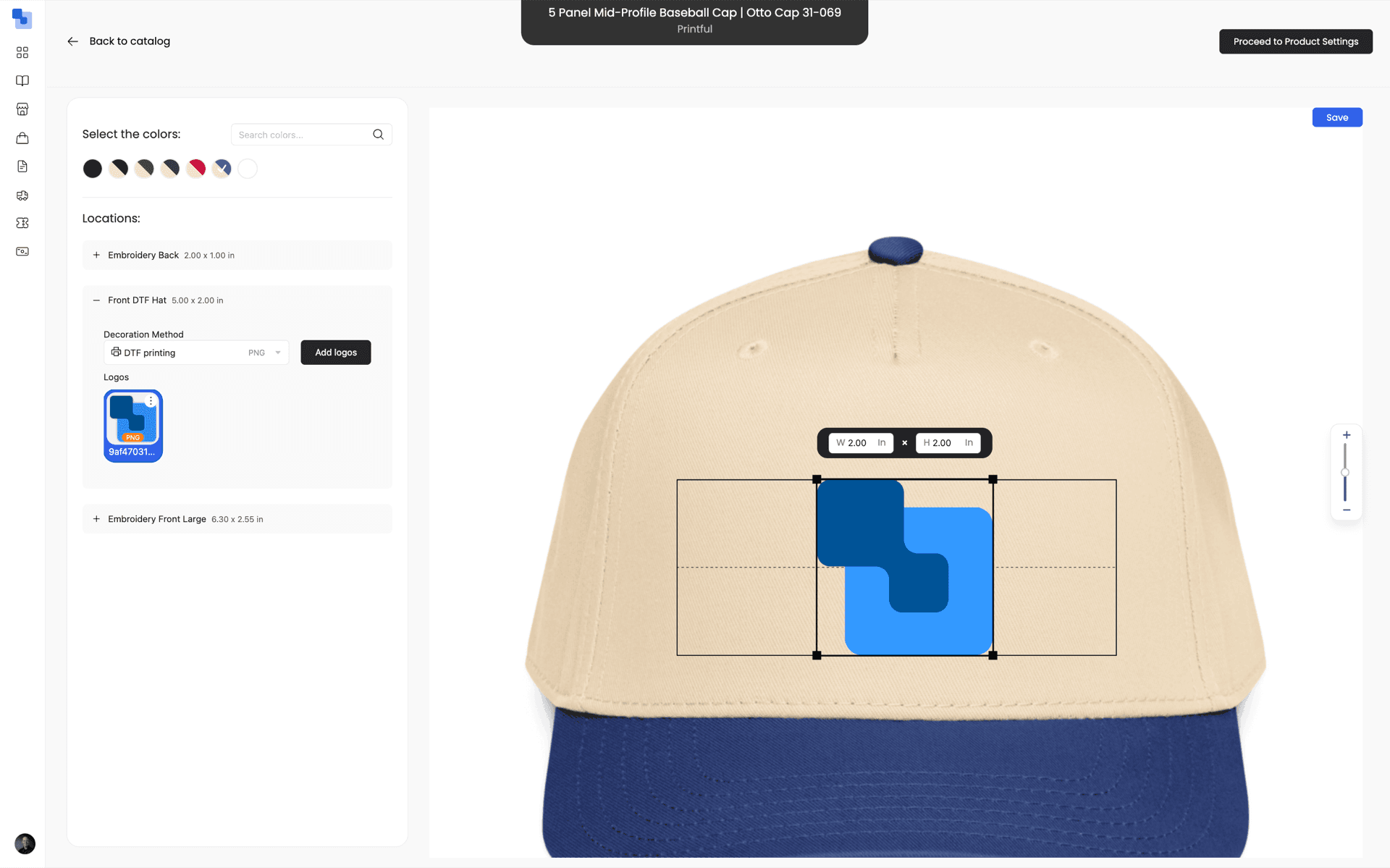
End customers need the ability to choose where their logo appears on a product. Left chest, right chest, full front, full back — the placement matters, and it varies by product, by client, and by use case.
A proper company store platform lets you configure multiple logo positions per product and gives the end customer a visual selector during checkout. It should also support multiple logos on a single item — for example, a company logo on the front and a division name on the back. If your platform requires you to create a separate SKU for every placement variation, you'll spend more time on setup than on selling.
2. Personalization
Personalization is one of the strongest drivers of perceived value in promotional products. End customers should be able to add their name, employee number, phone number, or other personal details directly to the product during checkout.
This applies to more than just apparel. Business cards, name badges, and stationery all benefit from built-in personalization fields. The platform should pass personalization data directly to the decorator as part of the order payload — no manual intervention, no email threads, no spreadsheets.
3. 12+ Decoration Methods
Promo isn't just screen printing anymore. A modern platform needs to support at least a dozen decoration methods to cover the full range of products and client expectations:
- DTG (direct-to-garment)
- DTF (direct-to-film)
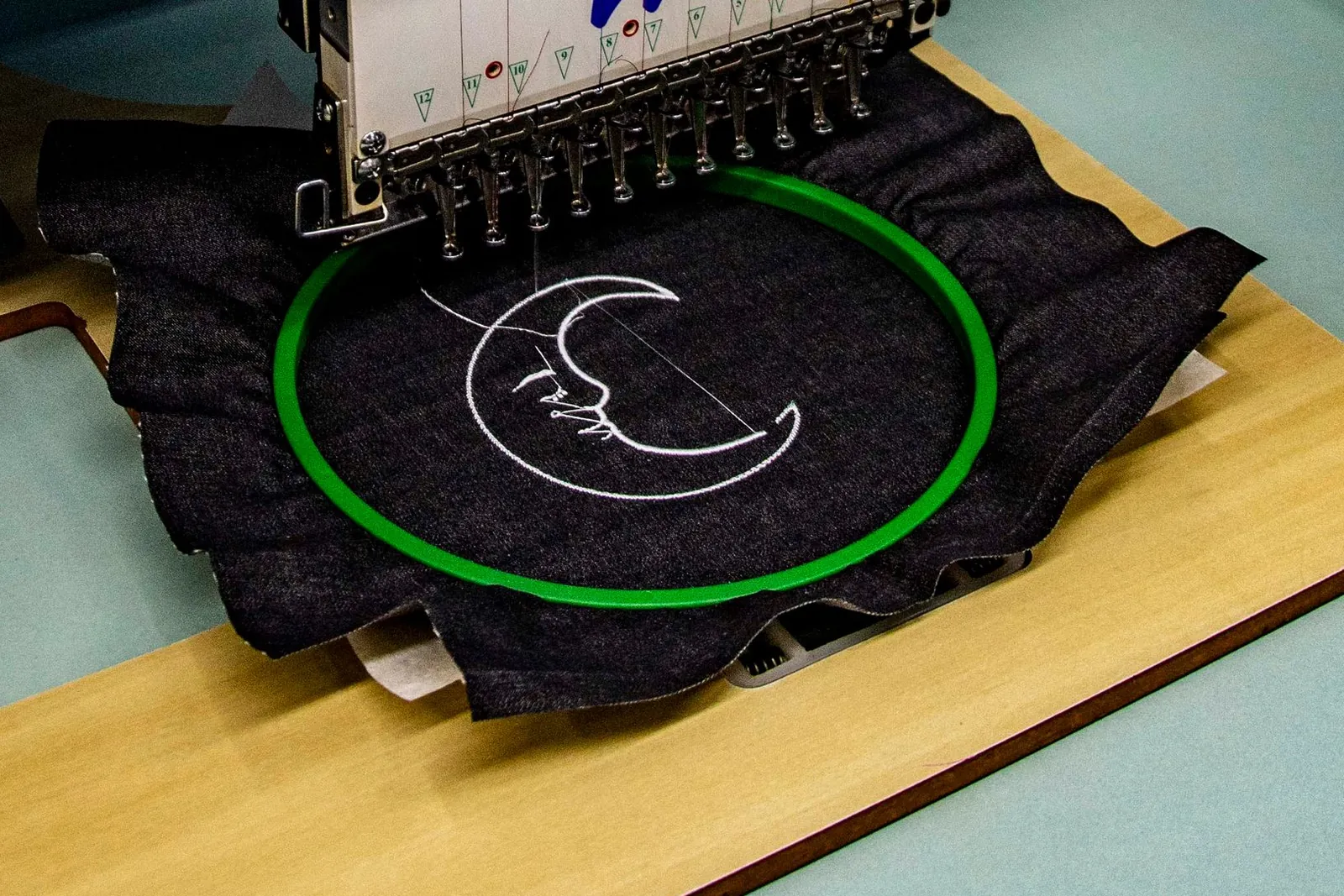
- Embroidery
- Screen print
- Sublimation
- Engraving
- UV printing
- UV DTF
- Heat transfer
- Dye sublimation
- Digital print
- Full color
Each method has different cost structures, production times, and artwork requirements. Your platform should handle all of them natively — routing orders to the right decorator based on the method specified, without manual intervention.
4. Support for Multiple Product Types
If your platform only handles apparel, you're leaving money on the table. A complete on-demand store needs to support the full range of promotional products:
- Apparel: t-shirts, polos, hoodies, jackets, hats
- Hard goods: pens, keychains, phone accessories, tools
- Electronics: USB drives, chargers, Bluetooth speakers
- Paper print: business cards, brochures, flyers, postcards
- Drinkware: mugs, tumblers, water bottles
- Bags: totes, backpacks, drawstring bags
- Umbrellas, lanyards, and specialty items
Your decorator network determines what you can offer, but your platform should never be the bottleneck. If a decorator can produce it, your store should be able to sell it. Visit our partner page to see the range of product categories available through connected decorators.
5. Coupons and Fundraising
Company stores often serve as the fulfillment engine for employee rewards, client gifting, and fundraising campaigns. That means your platform needs built-in support for:
- Coupon codes — percentage-based or fixed-amount discounts, with optional expiration dates and usage limits
- Fundraising campaigns — where a portion of each sale goes to a cause or organization
Without these features, you'll end up managing discounts in spreadsheets, which defeats the purpose of automation. The platform should handle the accounting and give you reporting on how coupons are being used. Check our FAQ for more details on how coupon economics work with on-demand fulfillment.
6. Unlimited Stores, Users, and Organizations
Scaling a promotional products business means managing dozens — sometimes hundreds — of client stores. If your platform charges per seat, per store, or per user, your costs will grow faster than your revenue.
Look for a platform that offers unlimited stores, unlimited end-user accounts, and the ability to create sub-organizations for each sales rep, client, or division. This structure lets you onboard a new client without worrying about incremental platform costs and gives your sales team autonomy to manage their own accounts.
Per-seat pricing models made sense in the SaaS era. In the promo industry, where you might have 500 end users across 40 stores, they don't.
7. Distributor Markup Control
Your margin is your business. The platform should give you complete control over how you price products, with two core capabilities:
- Percentage markup — add a fixed percentage on top of the decorator's COGS
- Fixed price — set an exact sell price regardless of COGS
Critically, the platform should show you the decorator's real-time COGS so you know your exact margin before you set the price. If you're guessing at costs or waiting for quotes, you can't price competitively and you can't guarantee your margin.
Real-time COGS visibility — pulled directly from your decorator partners — is what separates a promo platform from a generic storefront. Visit our pricing page to see how Brikl handles markup and COGS transparency across plans.
8. Fast Store Setup with Bulk Operations
Speed matters. If it takes weeks to set up a new client store, you're burning hours that should be spent selling. A modern platform should offer:
- Pre-built store templates — start with a proven layout and customize from there
- Bulk product import — upload dozens or hundreds of products at once via CSV or API
- Catalog cloning — reuse product catalogs across multiple stores without re-uploading artwork and configuration
A new company store should take minutes to configure, not days. The faster you can launch, the faster you start earning. Bulk operations are especially important for distributors managing large programs with multiple locations or divisions.
Choosing a Platform
The promotional products industry has specific requirements that generic e-commerce platforms were never designed to meet. When evaluating company store solutions, use this checklist as a baseline. If a platform can't handle multi-logo placement, personalization, multiple decoration methods, and real-time COGS visibility, it wasn't built for promo.
Brikl offers all eight of these features on every plan — from Launch to Enterprise. There are no feature gates that lock critical capabilities behind higher tiers. Whether you're running one store or one hundred, you get the full toolset.
Explore the pricing page to compare plans, or visit Merch Sellers to see how Brikl is built specifically for promotional product distributors.
Related Reading
- How to Build a Company Store That Employees Actually Use — The practices that drive repeat purchases and keep company stores active.
- The Complete Guide to B2B Merchandise Programs — Everything distributors need to know about building and scaling B2B merch programs.
- Screen Printing vs. Embroidery vs. DTG: Choosing the Right Decoration Method — A technical comparison to help you offer the right decoration options in your stores.
More from the blog
Growth
Coupons That Actually Move Merch
A coupon code is more than a discount — it's a reason to buy now. Here's how to use percentage and fixed-amount coupons to launch drops, reward audiences, and clear seasonal merch.

Growth
Why Personalization Matters for Promotional Product Distributors
Team stores, corporate programs, and school spirit shops all share one need: every item should feel like it belongs to the person wearing it. Without built-in personalization, distributors lose hours to spreadsheets, typos, and re-keyed orders. Here's why personalization belongs inside the product on Brikl, not in an inbox.

Growth
The Fastest Way to Launch On-Demand Stores
From blank page to live, branded storefront in roughly 22 minutes — without inventory, without bulk minimums, and without writing a single line of code.